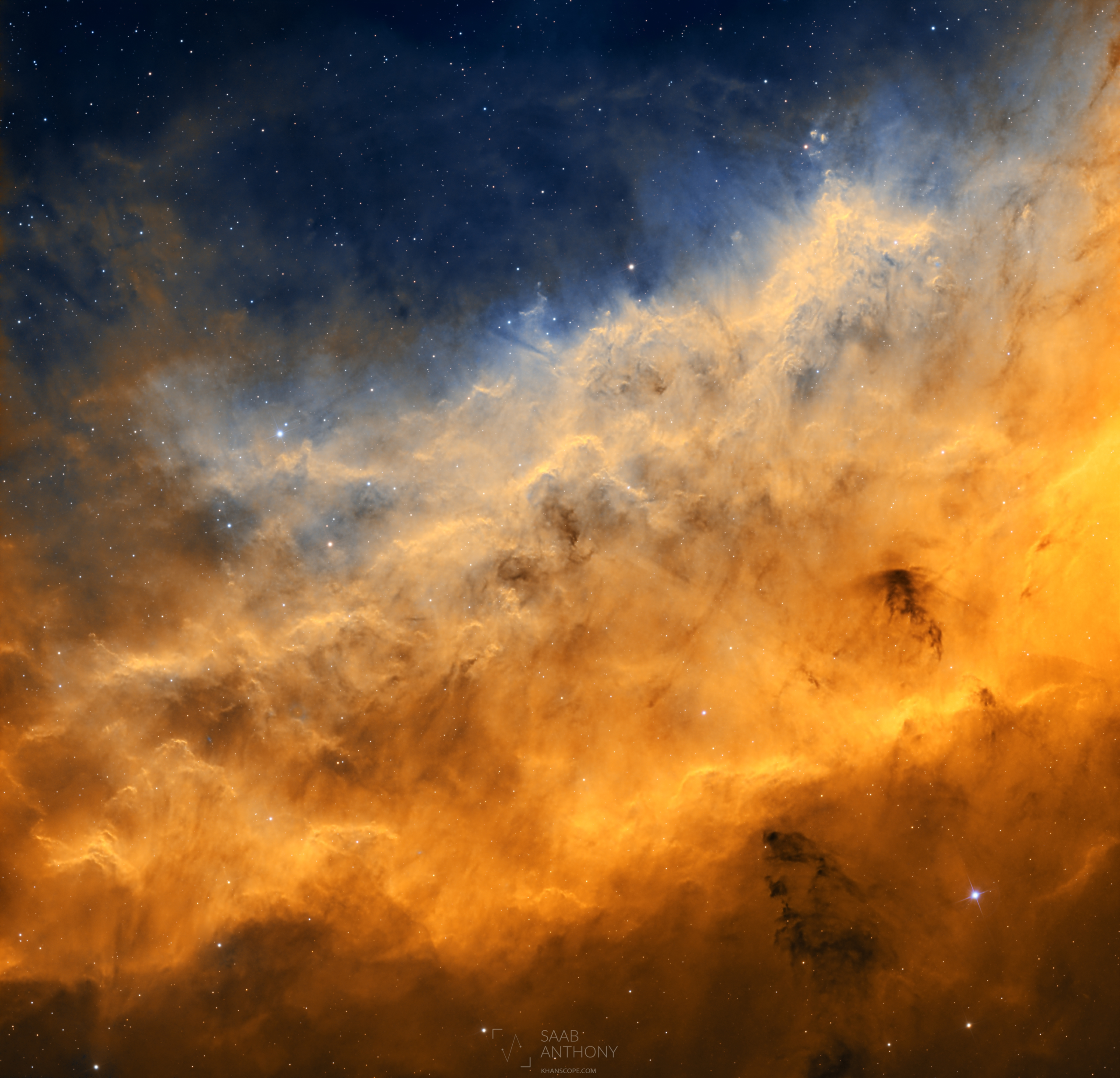
NGC 1499 – The California Nebula
by Anthony Saab
Telescope: TS UNC 6″ F4 Newtonian
Camera: ZWO ASI1600MM-PRO
Mount: Celestron AVX
Filters: ZWO 1.25″ SHO
The California Nebula (NGC 1499) is a large and beautifully shaped emission nebula located in the constellation Perseus, approximately 1,000 light-years away. Its name comes from its striking resemblance to the shape of the U.S. state of California when seen in wide-field images.
Spanning over 100 light-years across, the nebula glows predominantly red due to the emission of hydrogen-alpha light — a signature of ionized hydrogen gas. The primary source of this ionization is the hot, blue O-type star Xi Persei, which lies just west of the nebula. Radiation from this star energizes the hydrogen atoms in the cloud, causing them to emit light as they recombine.
The California Nebula is a challenging target for visual observers, due to its low surface brightness, but it’s a favorite among astrophotographers — especially those using hydrogen-alpha filters, which reveal its rich structure and complex gas formations in incredible detail.
This glowing river of interstellar gas stands as a quiet testament to stellar radiation and the sculpting power of light across vast cosmic distances.